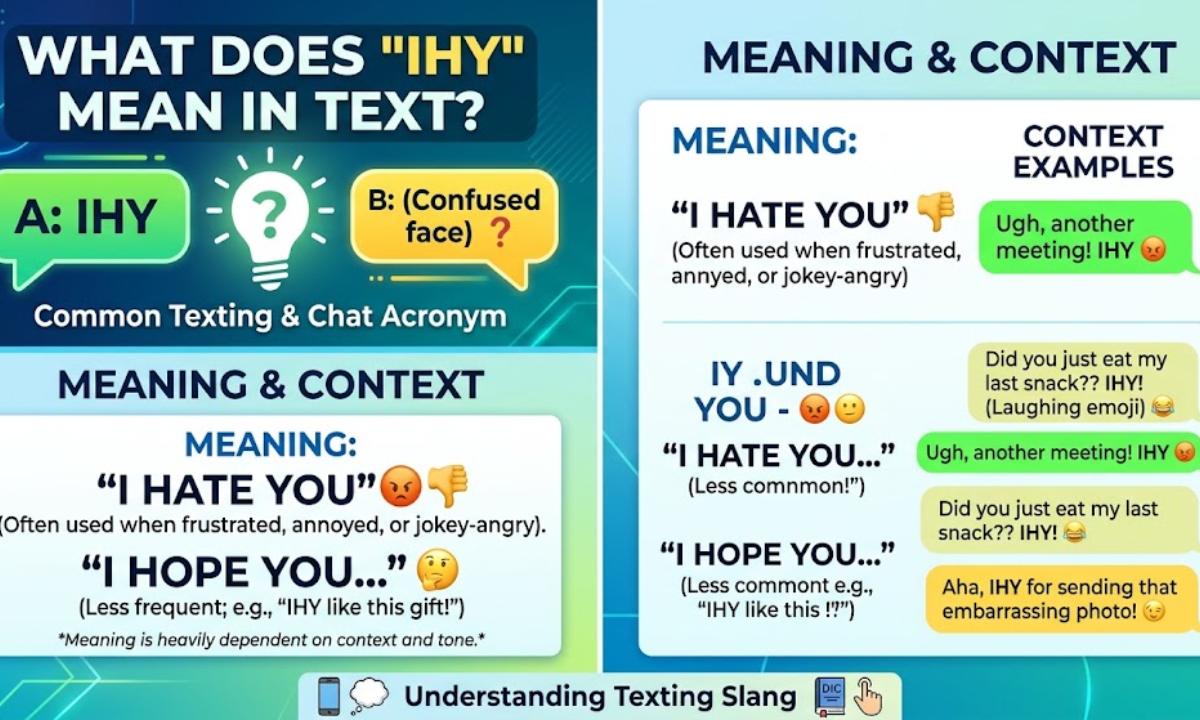
Scrolling through a group chat and suddenly someone drops “IHY” out of nowhere? You’re not alone. This tiny four-letter abbreviation shows up everywhere — in texts, comments, DMs, and even dating app conversations — and it can mean very different things depending on who’s typing it and why.
If you’ve ever paused mid-conversation wondering whether you just got playfully roasted or genuinely insulted, this guide is for you. Below, we’ll break down the real IHY meaning in text, where it came from, how people actually use it today, and how to reply without any awkward misunderstandings.
What Does IHY Mean in Text?
IHY most commonly stands for “I Hate You.” It’s a short, fast way to express frustration, annoyance, or mock anger without typing out the full phrase.
But here’s the twist: IHY rarely means literal hatred. In most everyday texting, it’s used as a joke, a tease, or a dramatic reaction to something funny, annoying, or unexpected — not as a genuine expression of dislike.
Because texting strips away tone of voice and facial expressions, the same three letters can land as playful banter in one conversation and as a real jab in another. Context is everything.
Common Meanings of IHY
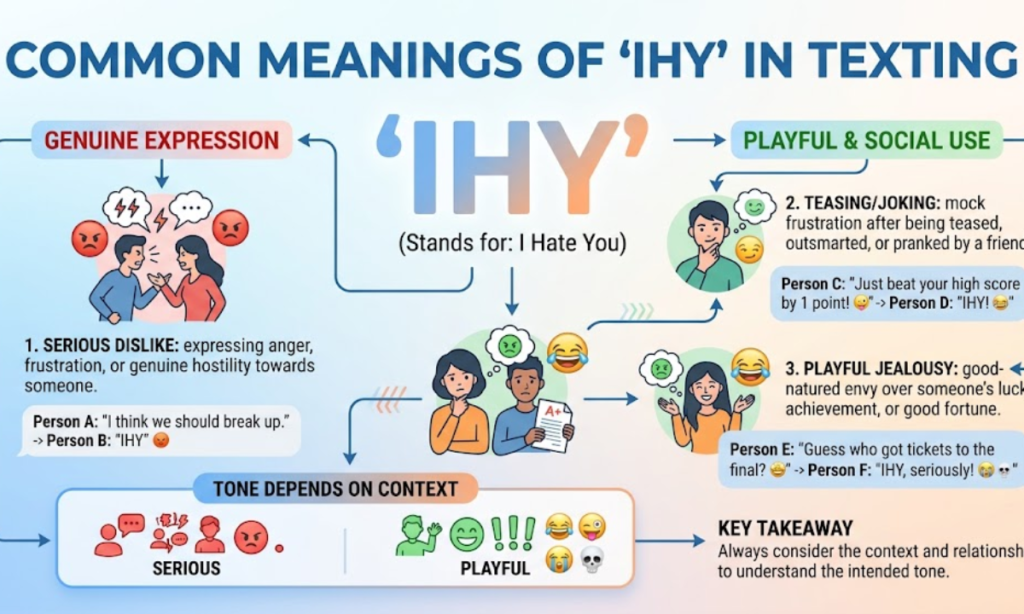
While “I Hate You” is the most popular definition, IHY is also used as shorthand for a few other phrases. Here’s a quick breakdown:
| Abbreviation | Meaning | Common Use Case |
| IHY | I Hate You | Playful annoyance, sarcasm, teasing, sometimes genuine frustration |
| IHY | I Hear You | Agreeing with or acknowledging what someone said |
| IHY | I Heart You | Casual, informal way of saying “I love you” |
Out of these three, “I Hate You” is by far the most frequently used version online, especially on social media and in texting between friends. The other two meanings pop up occasionally but are much less common.
Where Did IHY Come From?
Like most internet slang, IHY grew out of the need to type faster. As texting and instant messaging became part of everyday communication in the early 2000s, people started shortening common phrases to save time and keystrokes.
“I hate you” was already a phrase people used casually and jokingly in spoken conversation, especially among close friends. It made sense that it would eventually get compressed into an abbreviation once SMS and chat apps took off.
A few factors sped up its spread:
- Character limits on early SMS plans encouraged shorter messages
- Social media platforms like Twitter and Instagram normalized abbreviated slang
- Group chat culture made quick, reactive one-liners like IHY popular for expressing exaggerated emotion
- Meme culture turned phrases like IHY into a running joke rather than a literal statement
Today, IHY is firmly part of internet slang and texting culture, right alongside terms like ILY, SMH, and IDK.
How People Use IHY in Different Contexts
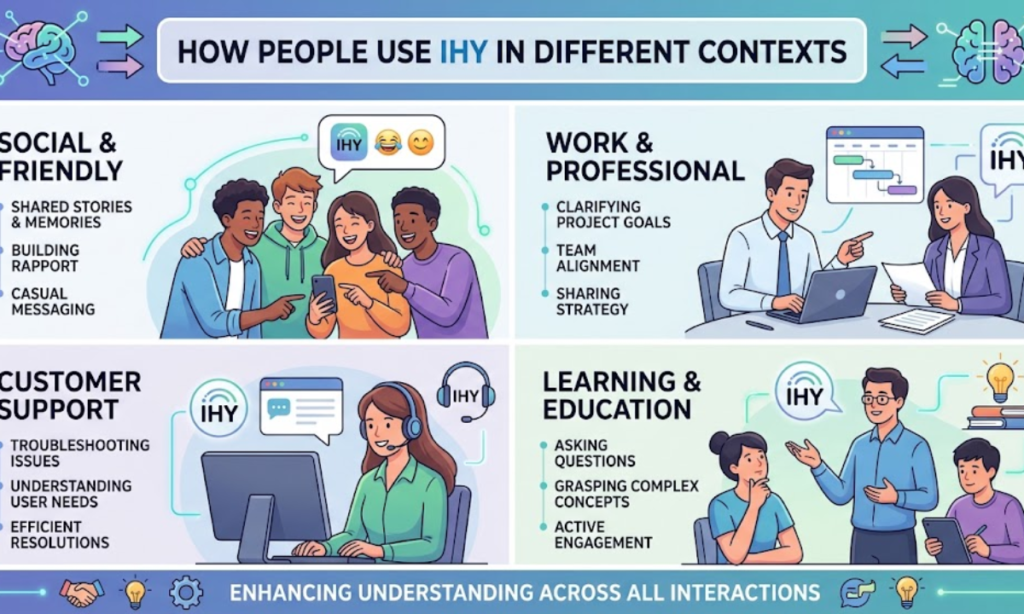
The tone behind IHY changes a lot depending on the relationship between the people texting and the situation they’re in.
Between Close Friends
Among friends, IHY is almost always playful. It usually pops up after someone:
- Shares an embarrassing photo
- Wins a game or beats a friend at something
- Says something funny or teasing
- Cancels plans last minute
In these cases, IHY is basically the texting equivalent of a friendly eye-roll.
In Romantic Relationships
Between couples or people flirting, IHY often carries an affectionate, joking undertone — closer to “you’re so annoying, but I like you” than actual anger. It’s frequently paired with emojis like 😂, 🙄, or ❤️ to make the tone obvious.
In Serious or Tense Conversations
Context matters most here. If IHY shows up during an actual argument, with no emojis, jokes, or lighthearted follow-up, it may reflect real frustration or hurt feelings. In these situations, it’s worth taking a step back and clarifying intent rather than assuming it’s a joke.
Among Strangers or Online Comments
When used on public posts, comment sections, or with people who don’t know each other well, IHY is more likely to be misread. Without established rapport, the sarcastic tone doesn’t always come through.
Signs IHY Is Being Used Jokingly
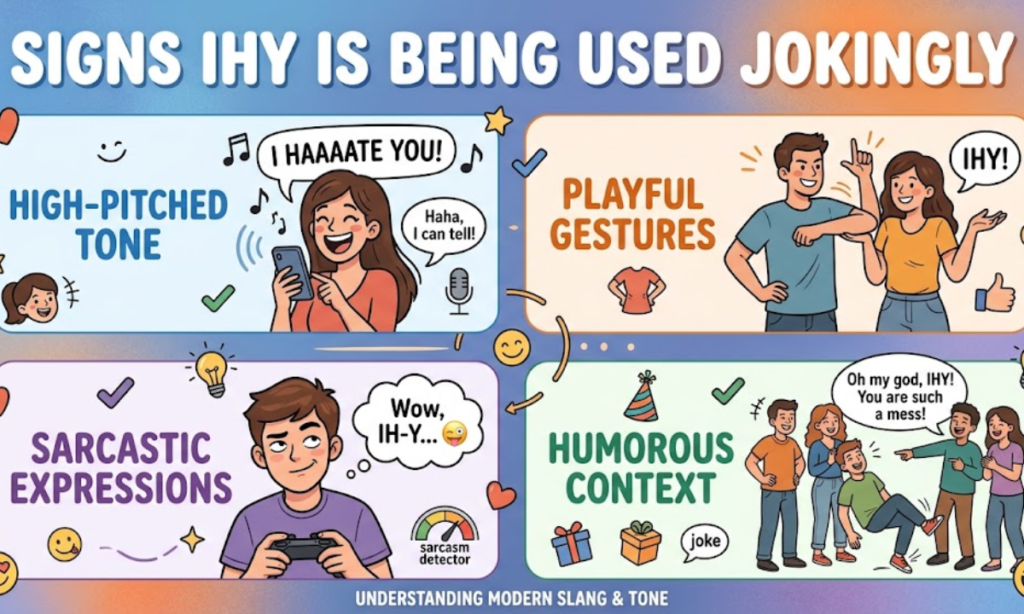
Not sure how to read the message you just got? These clues usually signal a playful IHY rather than a serious one:
- It’s followed by laughing emojis (😂, 🤣) or crying-laughing reactions
- It comes right after a funny or teasing moment
- The sender still continues the conversation normally afterward
- It’s part of an inside joke or recurring bit between you two
- There’s no prior tension or argument in the conversation
On the other hand, IHY sent alone, in all caps, or during a heated exchange is more likely to reflect genuine frustration.
How to Respond to IHY

Not sure how to reply? Here are a few natural, low-pressure responses depending on the vibe:
- If it’s clearly a joke: Reply with “lol ihy2” (I hate you too) or a laughing emoji to match the energy.
- If you’re unsure of the tone: Ask directly — “haha wait are you actually mad?” clears things up fast.
- If it seems serious: Address it calmly, like “hey, did I do something to upset you?”
Matching the sender’s energy is usually the safest bet when the meaning feels obvious, while asking for clarification works best when it doesn’t.
IHY vs. Similar Texting Abbreviations
IHY often gets confused with other short, emotion-driven acronyms. Here’s how it compares:
| Term | Full Meaning | Typical Tone |
| IHY | I Hate You | Playful, sarcastic, occasionally serious |
| ILY | I Love You | Affectionate, sincere |
| IFHY | I Hate You (with affection, from a song title) | Bittersweet, love-hate |
| SMH | Shaking My Head | Disapproval or disbelief |
| IDC | I Don’t Care | Dismissive, casual |
Understanding these differences helps you avoid mixing up tone when reading fast-paced conversations.
Why Understanding Slang Like IHY Matters
Digital communication moves fast, and abbreviations like IHY are now a normal part of how people express emotion online. Misreading a term like this can lead to unnecessary confusion, hurt feelings, or awkward replies. Knowing the different IHY Meanings in text — and how to spot the tone behind them — makes it much easier to communicate confidently in texts, DMs, and social media conversations.
Conclusion
At its core, IHY meaning in text usually points back to “I Hate You,” but it’s almost never meant literally. Whether it shows up as playful teasing between friends, a flirty jab in a relationship, or an occasional stand-in for “I Hear You” or “I Heart You,” the real meaning depends on context, tone, and the relationship between the people texting.
The next time IHY lands in your inbox, look at what came before it, check for emojis or jokes, and consider your relationship with the sender. In most cases, you’ll find it’s nothing more than a lighthearted way of saying “you’re so annoying — but I still like you.”
Frequently Asked Questions
What does IHY mean from a girl?
It almost always means the same thing regardless of gender — usually “I Hate You” used jokingly, though context and emojis determine the real tone.
Is IHY a bad word?
No, IHY isn’t offensive on its own; it’s internet slang that’s typically used playfully rather than to genuinely insult someone.
What does IHY2 mean?
IHY2 means “I Hate You Too,” usually sent as a joking reply to someone who texted IHY first.
Can IHY mean I Love You?
In rare cases, yes — some people use IHY informally to mean “I Heart You,” though this is far less common than “I Hate You.”
How do I know if IHY is serious?
Check the context: playful IHY usually comes with emojis or follows a joke, while serious IHY often appears alone during real tension or conflict.
Is IHY only used by teenagers?
No, while it’s popular among younger texters, IHY is used across age groups on social media, texting apps, and online chats.

I’m Hannah Grace, a content writer and language enthusiast focused on explaining texting abbreviations, slang, internet terms, and modern expressions. I create clear, accurate, and easy-to-understand content to help readers discover the meaning behind words and phrases used in everyday conversations.