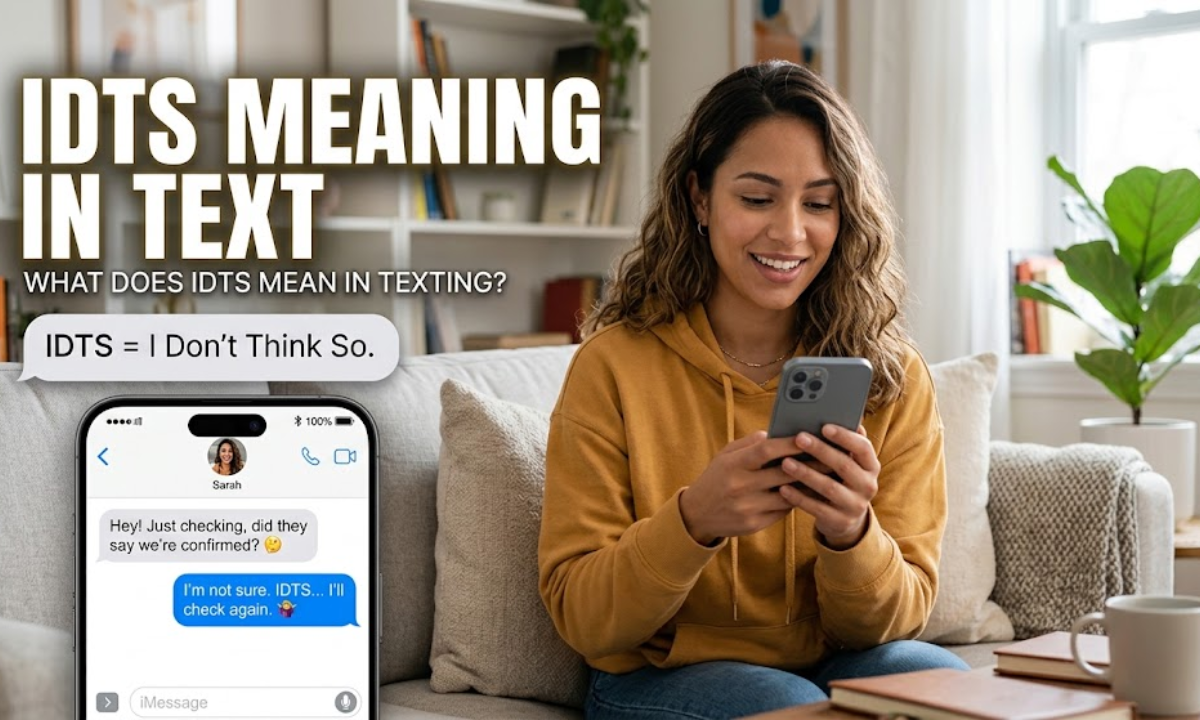
Scrolling through a group chat and someone drops “IDTS” out of nowhere? You’re not the only one who’s paused mid-scroll to figure out what it means. This little four-letter combo shows up constantly in texts, Instagram comments, and Snapchat replies — and once you know the IDTS meaning, you’ll start noticing it everywhere.
This guide breaks down exactly what IDTS stands for, where it came from, how people actually use it, and how to reply when someone sends it your way.
What Does IDTS Stand For?
IDTS stands for “I Don’t Think So.” It’s an informal texting abbreviation used to express doubt, mild disagreement, or a soft “no” without typing out a full sentence.
Understanding the intent behind it comes down to context. It can sound:
- Thoughtful and unsure (“IDTS, but I could be wrong”)
- Politely negative (“IDTS that’s a good idea”)
- Slightly dismissive, depending on tone and punctuation
Most of the time, though, it’s just a quick, casual way to disagree or question something without sounding harsh.
IDTS Meaning: Quick Overview
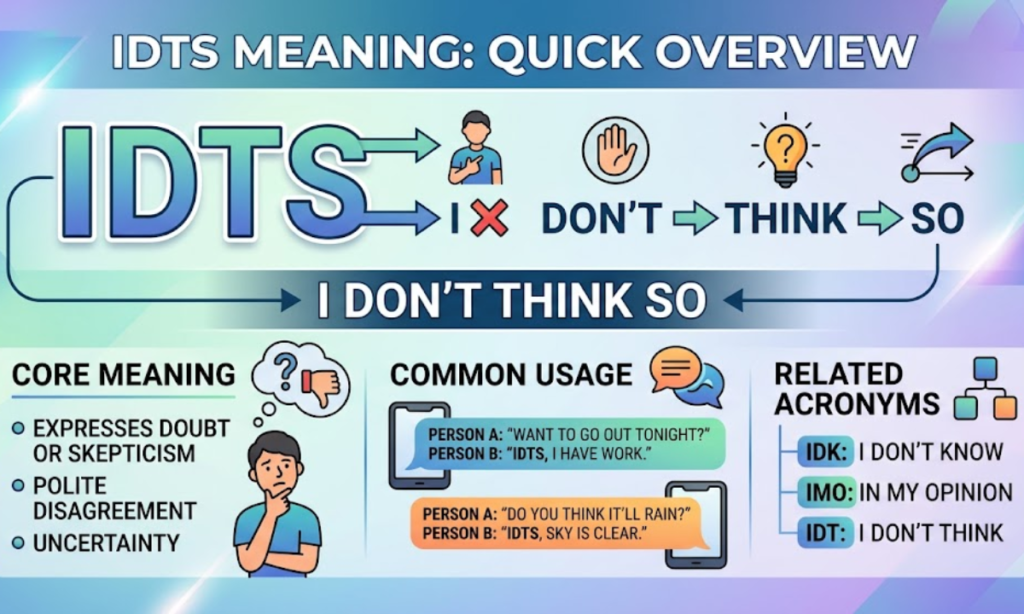
| Detail | Explanation |
| Full form | I Don’t Think So |
| Category | Internet slang / texting abbreviation |
| Tone | Casual, mildly negative or uncertain |
| Common platforms | Texting, Snapchat, Instagram, TikTok, WhatsApp |
| Formal use? | No — avoid in professional or business writing |
| Case sensitivity | Works the same in uppercase (IDTS) or lowercase (idts) |
Where Did IDTS Come From?
Like most texting shorthand, IDTS grew out of the need to type faster. As SMS and early messaging apps limited character counts and people wanted quicker ways to respond, abbreviations like IDK (“I don’t know”), TBH (“to be honest”), and IDTS became everyday shortcuts.
Nobody claims a single origin point for IDTS. It simply developed alongside other casual acronyms as digital conversation sped up. Once smartphones and social media took over, it spread from text messages into comment sections, direct messages, and gaming chats.
How Is IDTS Used in Real Conversations?
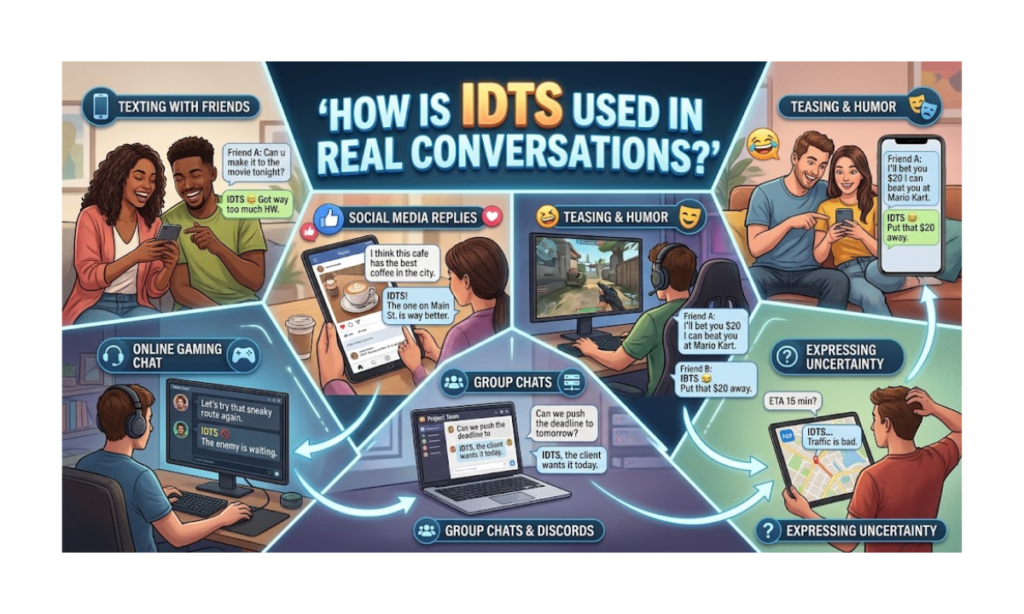
The IDTS meaning stays fairly consistent, but the way people apply it shifts depending on the situation. Here are common ways it shows up:
- Casual disagreement — Friend: “Pineapple belongs on pizza.” You: “IDTS.”
- Expressing doubt — Coworker: “We can finish this by tonight.” You: “IDTS, that timeline’s tight.”
- Soft refusal — Someone suggests a plan you’re not into: “IDTS, let’s try something else.”
- Playful skepticism — Often paired with emojis (😅, 🤔) to keep the tone light.
IDTS on Snapchat, Instagram, and TikTok
On these platforms, IDTS usually keeps its core meaning but adapts slightly to the format:
- Snapchat: Used in private chats to express doubt or a quick “no.”
- Instagram: Common in comments and DMs when someone disagrees with an opinion or post.
- TikTok: Appears in comment sections reacting to a claim or trend, often as a light joke.
Is IDTS Rude?
No, IDTS isn’t inherently rude. It’s typically a neutral or casual way to push back on something. That said, tone and context matter a lot:
- In friendly chats, it usually reads as harmless and low-key.
- In serious or heated conversations, it can come across as dismissive if there’s no explanation attached.
- Adding a reason or an emoji (“IDTS, seems risky 😬”) softens it and keeps the conversation friendly.
IDTS vs. Similar Texting Abbreviations
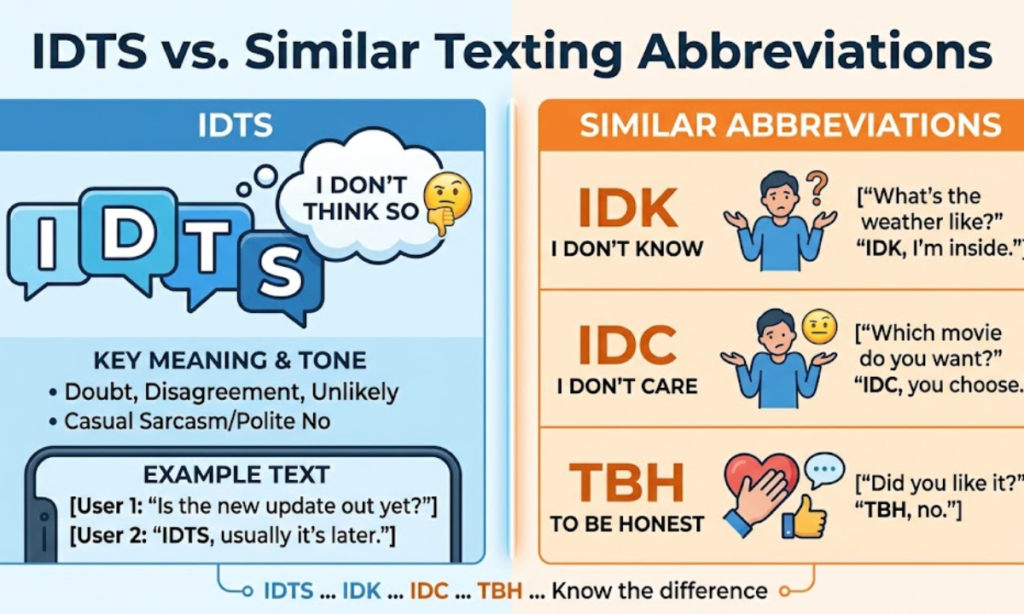
People often confuse IDTS with other common acronyms. Here’s how they differ:
| Abbreviation | Full Meaning | What It Expresses |
| IDTS | I Don’t Think So | Doubt, disagreement, soft no |
| IDK | I Don’t Know | Lack of information |
| NGL | Not Gonna Lie | Honest opinion, often blunt |
| TBH | To Be Honest | Sincerity or candid thoughts |
| IMO | In My Opinion | Personal viewpoint |
The key difference is that IDTS specifically signals doubt or disagreement, while something like IDK signals uncertainty about facts, not opinions.
Alternatives to IDTS
Depending on the setting, you might want a different way to say the same thing. Here are some options grouped by tone:
Casual alternatives:
- Not really
- I doubt it
- Probably not
- Maybe not
More formal alternatives:
- I don’t believe that’s the case
- I’m not sure that’s correct
- I have some doubts about that
Professional/business alternatives:
- I don’t think that would be feasible
- That may not be the best approach
- I have some concerns about this
Knowing which one fits the moment helps you pick the right substitute when texting slang doesn’t fit the conversation — like in a work email or a formal message.
When Should You Avoid Using IDTS?
While it’s fine for texting and social media, there are situations where IDTS just doesn’t belong:
- Professional emails — Spell out “I don’t think so” or use a more formal phrase instead.
- Job interviews or workplace chats — Slang can come across as unprofessional.
- Formal writing — Reports, essays, and official documents should avoid texting abbreviations entirely.
- Conversations with people unfamiliar with slang — Not everyone recognizes texting shorthand, so context clues matter.
How to Reply When Someone Texts You “IDTS”
If a friend sends you IDTS, here’s how you might respond depending on the vibe:
- Ask for clarification: “IDTS too — why do you think that?”
- Push back lightly: “Really? I actually think it could work.”
- Agree and move on: “Fair enough, let’s go with plan B.”
Reading the tone of the full message (and any emojis attached) usually tells you whether the person is joking, genuinely unsure, or firmly disagreeing.
Why the IDTS Meaning Still Matters in 2026
Texting slang comes and goes quickly, but the IDTS meaning has stayed pretty stable over the years. It’s short, easy to understand, and works across almost every messaging platform — from basic SMS to Snapchat and TikTok comments. As long as people want a fast way to express doubt without sounding harsh, abbreviations like IDTS will keep showing up in everyday digital conversation.
Frequently Asked Questions About IDTS Meaning
What does IDTS mean in text?
IDTS means “I Don’t Think So.” It’s used to express doubt, disagreement, or a soft no in casual texting.
Is IDTS rude or offensive?
No. IDTS is generally neutral or casual, though tone and context can make it feel more dismissive.
Is IDTS safe to use at work?
It’s best avoided in professional settings. Use a full phrase like “I don’t think that’s the best option” instead.
What’s the difference between IDTS and IDK?
IDTS expresses doubt or disagreement, while IDK (“I don’t know”) expresses a lack of information.
Can IDTS mean something other than “I don’t think so”?
Rarely. In almost all texting contexts, IDTS refers to “I don’t think so.”
Do people still use IDTS in 2026?
Yes. While newer slang terms keep appearing, IDTS remains a common and recognizable texting abbreviation.
Should I capitalize IDTS?
Either works. Uppercase (IDTS) and lowercase (idts) carry the same meaning — lowercase is just more common in casual, quick texts.

I’m Hannah Grace, a content writer and language enthusiast focused on explaining texting abbreviations, slang, internet terms, and modern expressions. I create clear, accurate, and easy-to-understand content to help readers discover the meaning behind words and phrases used in everyday conversations.